Where Sambhalla, ikigai and the lotus meet.
Sambhalla is a business, a township and a promise. Underneath all three is one idea that India and Japan have shared for fifteen hundred years: a good life is built from daily practice, in good company, close to nature.
Sambhalla: a kingdom of peace that both Hindu and Buddhist India remember.
In the Kalachakra Tantra, the Buddha's teaching of the "wheel of time", Sambhalla is a hidden kingdom ruled by wise kings, where the whole society lives by wisdom and compassion. Tibetan tradition carried the story to the world, and teachers often render the name as the source of happiness.
In the Vishnu and Kalki Puranas, Sambhalla is the village where Kalki, the final avatar, will be born to begin a new age of truth, the Satya Yuga.
We take that ancient name as ours. We do not claim the mythical kingdom. We borrow its brief: a place where peace, wisdom, goodness and happiness are not ideals but the normal way of life.
A city rising out of a lotus, with a human spine at its centre.
The lotus roots in mud and opens clean. The Bhagavad Gita asks us to live "like a lotus leaf, untouched by water", and Japanese Buddhas sit on lotus pedestals for the same reason. In our mark, the petals hold the township; the towers are the homes and halls we build; the seven points of light are the seven chakras, rising from root to crown.

The long road from India to Japan.
Many of the ideas Japan is admired for began their journey in India. Sambhalla brings them back, enriched by fifteen centuries of Japanese practice.
The Buddha teaches in India
At Sarnath and across the Gangetic plain, the teaching of the middle way begins, carried by the symbol of the lotus.
Buddhism reaches Japan
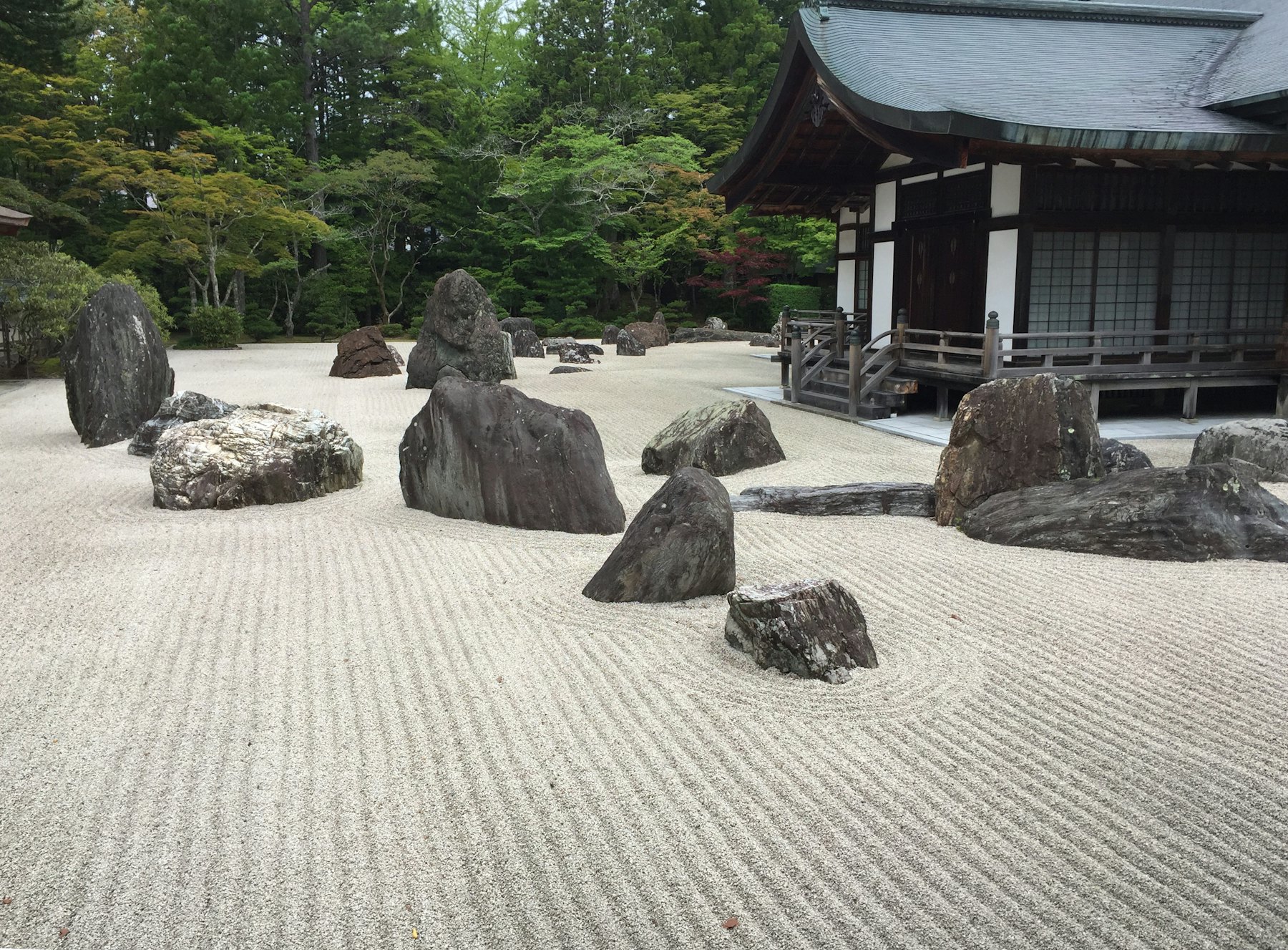
Scriptures and an image of the Buddha arrive at the Japanese court from the Korean kingdom of Baekje. Temples, gardens and new arts follow.
An Indian monk opens the Great Buddha's eyes
Bodhisena, who travelled from India to Japan in 736, leads the eye-opening ceremony of the Great Buddha of Tōdai-ji in Nara.
Sanskrit written in Japanese temples
Kūkai brings Shingon Buddhism home from China. Its temples still write Sanskrit seed syllables in the Siddham script, called bonji in Japan.
Indian deities with Japanese names
Saraswati is worshipped as Benzaiten, Brahma as Bonten, Indra as Taishakuten and Lakshmi as Kichijōten.
A special partnership, close to our site
India and Japan name their ties a Special Strategic and Global Partnership. Japan's Shinkansen technology is building the Mumbai–Ahmedabad high-speed rail line into Gujarat.
We plan the township the way yoga maps a person: root to crown.
Each chakra names a human need. Each one becomes a layer of the township, so that nothing a long life needs is missing, and nothing is out of reach.
Crown: spirit
सहस्रार SahasraraMeditation hall and silence garden. A place for prayer of any faith, and for sitting with nothing to do.
Third eye: wisdom
आज्ञा AjnaAcademy of lifelong learning. Elders teach crafts, languages and life; children and residents learn side by side.
Throat: expression
विशुद्ध VishuddhaAmphitheatre, music rooms, library. Storytelling evenings, bhajans, haiku circles and festivals of both cultures.
Heart: belonging
अनाहत AnahataShared courtyards and moai circles. Homes cluster around gardens so neighbours meet without planning to.
Solar: energy
मणिपूर ManipuraSolar power, movement and nourishment. Walking loops, yoga lawns, community kitchens and clean captive energy.
Sacral: creativity
स्वाधिष्ठान SvadhisthanaLotus ponds, ateliers and kitchen gardens. Water, making and growing: the joy of creating something every day.
Root: security
मूलाधार MuladharaSafe homes and care close by. Step-free design, 24-hour medical help, and the confidence of a secure, well-run society.
A reason to rise each morning, at every age.
The four-circle diagram is a modern Western drawing. In Okinawa, ikigai is simpler: the small daily reason to get up. It might be a grandchild, a garden, a craft, or the neighbours who expect you at tea. India calls the same idea svadharma, your own path of duty and meaning.
Sambhalla is built so that every resident has an ikigai within reach: a plot to grow, a class to teach, an atelier to work in, a festival to organise, a younger person to mentor.
Good manners are the cheapest infrastructure, and the most valuable.
Japan is admired worldwide for courtesy, cleanliness and calm. None of it is magic; it is practised daily and expected of everyone. These six habits, shared by both cultures, are written into how Sambhalla is run.
Omotenashi
Hospitality that anticipates, without being asked and without expecting reward. अतिथि देवो भव: the guest is god.
Ojigi and namaste
A bow and folded hands. Greeting without touching, with full attention, in both languages of respect.
Shoes off at the threshold
The genkan of a Japanese home and the doorway of an Indian one mean the same thing: the outside stays outside.
O-sōji
Japanese schoolchildren clean their own classrooms. A monthly shared cleaning morning keeps Sambhalla cared for by the people who live in it.
Mottainai
Regret at waste. Composting, repair cafés, water recycling and a library of things replace buying new.
Wa and shanti
Harmony before winning. Quiet hours, gentle signage, and a residents' council that decides by consensus.